Adam Smith Through a Coolnomics® Lens
From Invisible Hand to Cultural Resonance
Adam Smith’s ideas are often simplified into a slogan: the “invisible hand” of the market.
But the real Smith was more complex.
A moral philosopher before he was an economist, he wrote not only The Wealth of Nations but also The Theory of Moral Sentiments.
Through a Coolnomics® lens, this dual authorship matters enormously.
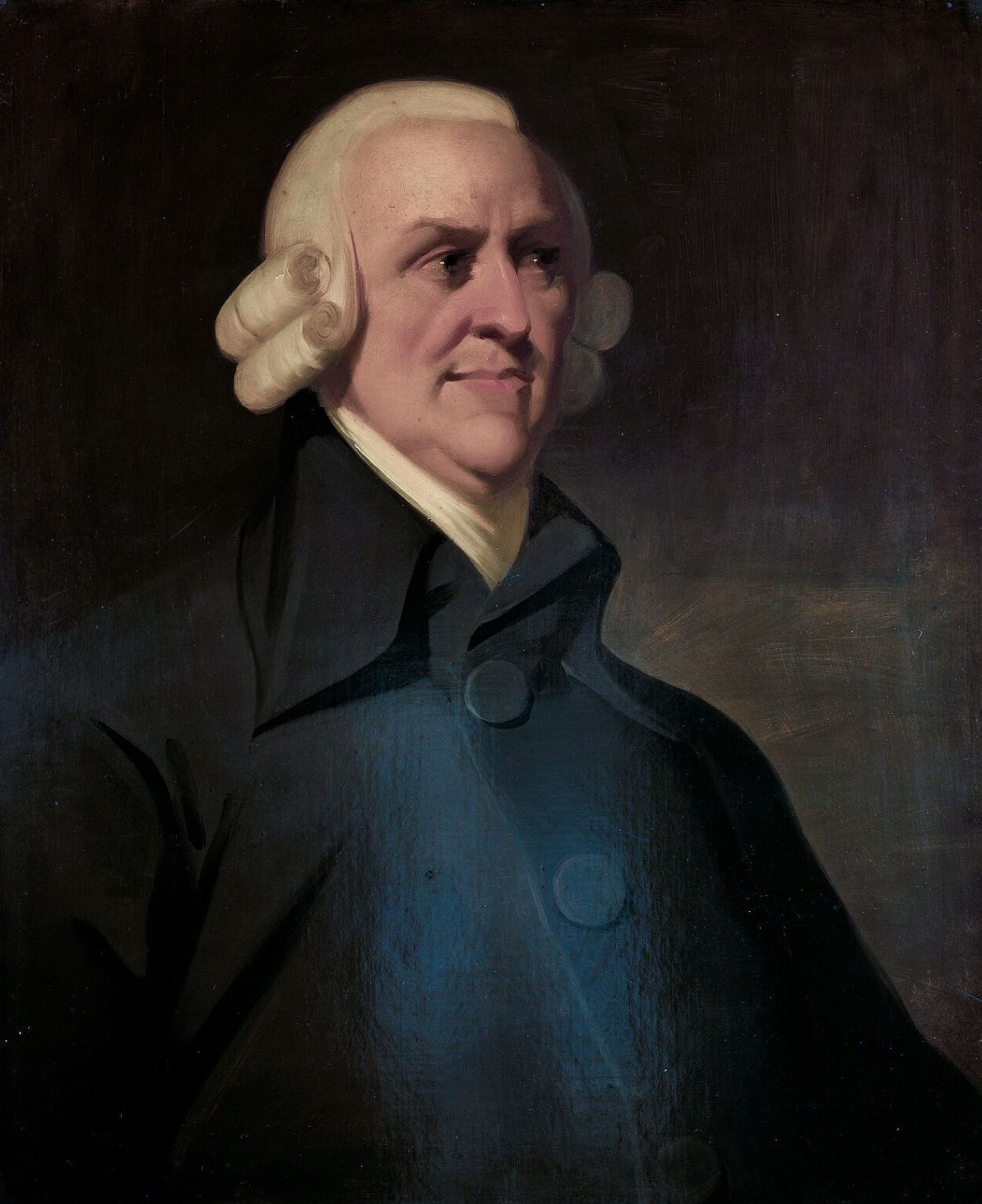
Adam Smith was an 18th century Scottish economist and philosopher, widely regarded as the father of modern economics.
In The Wealth of Nations he argued that markets, when functioning well, coordinate individual self-interest into broader prosperity through what he famously described as the “invisible hand.” Prices, competition and voluntary exchange could organise complex societies without central control.
But Smith was not a crude champion of greed. In his earlier work, The Theory of Moral Sentiments, he emphasised sympathy, morality and social trust. He believed markets only function within a moral framework shaped by shared norms and ethical behaviour.
For Coolnomics®, Smith matters because he recognised that economics is embedded in human behaviour. Self-interest operates inside culture, not outside it.
Let’s explore it.
1. The Invisible Hand vs The Resonance Equation
Smith’s core insight was that individuals pursuing their own interests can unintentionally generate collective prosperity. Markets coordinate through decentralised exchange.
Coolnomics® does not dismiss this. But it adds a layer.
Smith:
Self-interest drives exchange
Prices coordinate behaviour
Markets allocate resources efficiently
Coolnomics®:
Emotional resonance drives demand
Culture shapes perceived value
Meaning allocates attention
As articulated in Coolnomics® 101, economic behaviour is inseparable from social, political and emotional context.
Smith explained how markets function structurally.
Coolnomics® explains why certain markets ignite and others collapse.
The invisible hand may coordinate transactions.
Resonance coordinates desire.
2. Rational Self-Interest vs Emotional Human Behaviour
Smith is frequently misread as advocating pure rational self-interest. Yet in The Theory of Moral Sentiments, he argued that sympathy, moral judgment and social approval deeply shape behaviour.
This is where Coolnomics® finds strong alignment.
Coolnomics® argues that:
Humans respond to emotional cues
Culture overrides theory
Systems behave according to emotional truths, not just policy frameworks
Smith understood that markets rely on moral norms.
Coolnomics® extends this into cultural intelligence.
Where neoliberalism later reduced Smith to hyper-rational utility maximisation, Coolnomics® restores the emotional dimension.
In this sense, Coolnomics® is closer to the full Adam Smith than many modern interpretations of him.
3. Division of Labour vs Cultural Identity
Smith’s famous pin factory demonstrated how division of labour increases productivity.
Efficiency scales output.
But Coolnomics® asks a different question:
What happens to meaning?
In highly specialised economies:
Identity can fragment
Work can detach from purpose
Communities can weaken
Coolnomics® recognises productivity as essential but insists that sustainable systems must also generate:
Belonging
Aspiration
Cultural relevance
Without emotional infrastructure, economic efficiency alone produces fragility.
Smith optimised production.
Coolnomics® optimises resonance.
4. Moral Foundations of Markets
Smith believed markets required virtue to function properly. Trust, fairness and moral restraint were prerequisites.
Coolnomics® echoes this strongly.
Across its principles, authenticity and credibility are essential for lasting resonance.
Without credibility:
You may get attention
But you will not get trust
Smith would likely agree. A market without trust collapses.
Where Smith relied on moral sentiments to stabilise markets, Coolnomics® emphasises cultural guardrails. As outlined in the critique of neoliberalism, when hyper-individualism erodes shared identity, systems degrade.
Smith assumed moral culture would temper markets.
Coolnomics® warns that culture must be actively designed and maintained.
5. Wealth Creation vs What Matters
Smith’s ambition was national prosperity. He wanted societies to flourish through trade, productivity and specialisation.
Coolnomics® reframes prosperity:
Not just more wealth.
More of what matters.
As stated in Coolnomics® 101, the theory is designed to help create more of what matters to the world.
This moves beyond GDP into:
Emotional capital
Cultural capital
Regenerative economic design
Smith provided the architecture of modern capitalism.
Coolnomics® challenges leaders to ask whether that architecture now needs renovation.
Where Coolnomics® Builds on Adam Smith
Smith gave us:
Market coordination through self-interest
Division of labour
Moral foundations of exchange
Free trade as prosperity driver
Coolnomics® adds:
Cultural relevance as demand driver
Emotional intelligence as strategic capital
Authenticity as trust infrastructure
Regenerative economics as long-term stability
Smith answered:
How do markets generate wealth?
Coolnomics® asks:
What kind of wealth sustains human meaning?
Strategic Reflection
Adam Smith was not a cold technocrat. He was a moral philosopher who believed economic systems should serve human flourishing.
Coolnomics® can be seen not as a rejection of Smith, but as a 21st-century extension.
In Smith’s era, markets expanded across nations.
In ours, culture moves at algorithmic speed.
The invisible hand still operates.
But it now moves through networks of identity, emotion and digital amplification.
If Smith were alive today, he might recognise this truth:
Markets coordinate exchange.
Culture coordinates belief.
And belief, in the end, is what moves money.
About the Author
Robyn Wilson is a business strategist and economic theorist with two decades of experience leading commercial, cultural and public sector innovation. She is the founder of Coolnomics® Intelligence Lab & Business School where she teaches ambitious leaders how to build businesses that resonate.
Robyn holds an MBA from UTS Business School and has advised CEOs, policymakers, artists and investors on having big, cool ideas that are good for the world - and make money. Her work is used in boardrooms, lecture halls and leadership retreats across sectors.
She is a featured speaker on cultural resonance, business building and creative direction.
Speaking, strategy or collaboration enquiries: robyn@coolnomics.com
