David Hume and the Emotional Foundations of Coolnomics®
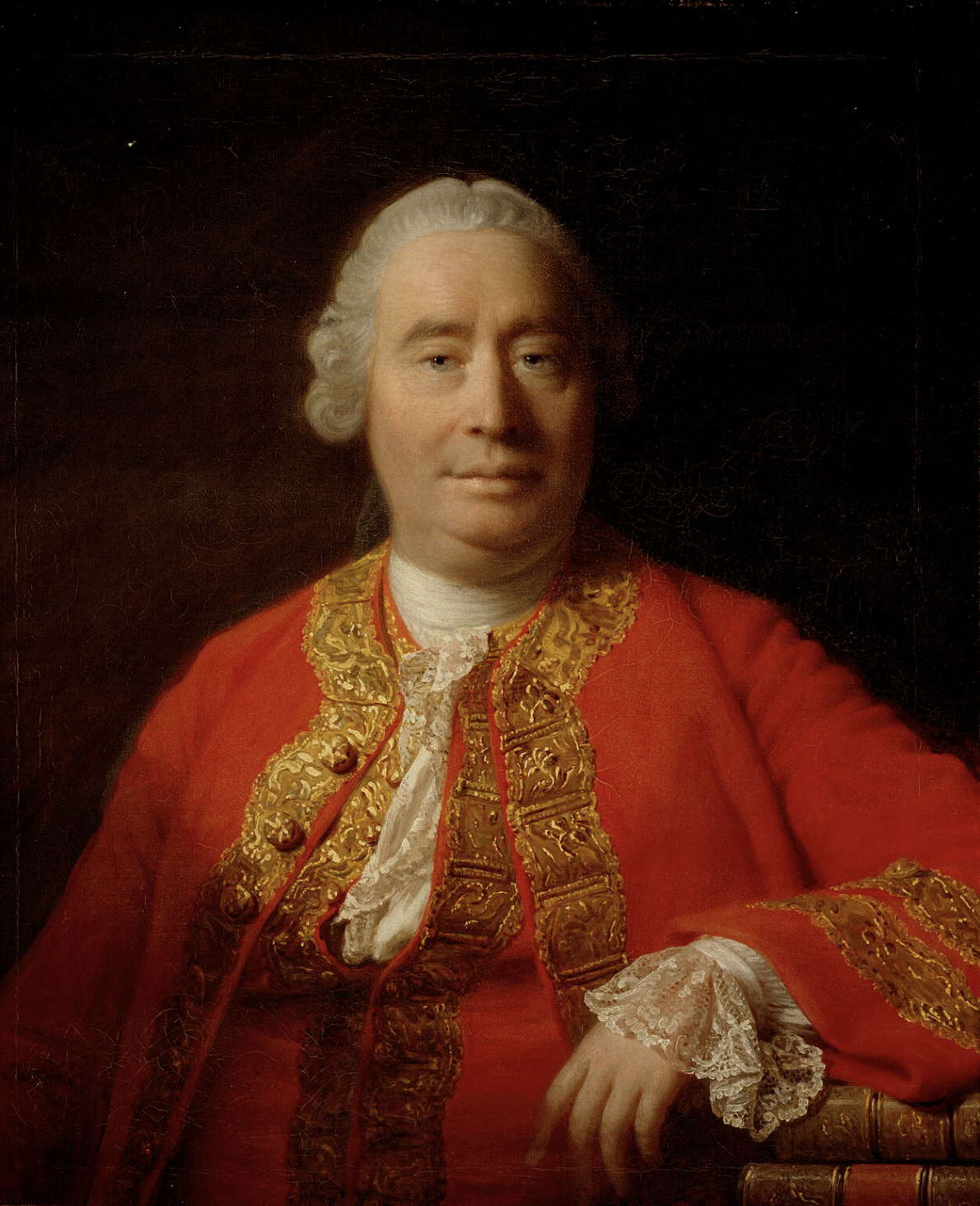
Coolnomics® argues that culture, emotion and human behaviour shape economic reality.
We pay reverence to David Hume as one of its intellectual ancestors.
His central insight was simple and radical:
Reason is not the master. It is the servant.
Coolnomics® begins from the same premise.
David Hume was an 18th century Scottish philosopher and a central figure of the Enlightenment.
He quietly dismantled the myth of the purely rational human long before behavioural economics, cultural economics or modern neuroscience existed.
His most radical idea was simple: human beings are not driven primarily by reason, but by emotion. Reason helps us calculate and justify, but our desires, fears and identities determine what we actually do.
He also introduced the idea of “sympathy”, the way emotions spread socially, shaping shared beliefs, trust and moral judgement.
Hume explained why emotion shapes behaviour. Coolnomics® explains how that emotional reality shapes markets.
Below is a synthesis of Hume’s key ideas, through a contemporary Coolnomics® lens.
1. Hume: Reason Serves Passion
Coolnomics®: Markets Are Emotional Systems
Hume famously argued that:
“Reason is, and ought only to be the slave of the passions.”
He did not mean humans are irrational. He meant that our desires, fears, affections and identities drive action. Reason merely helps us justify or execute what we already feel.
Neoliberal economics assumed rational actors. Hume knew better.
Coolnomics® builds directly on this truth:
Markets move with confidence and fear
Spending reflects aspiration and identity
Trust determines participation
Culture directs desire
As articulated in the Coolnomics® 101 methodology, we examine how emotions such as desire, trust and fear interact with market forces.
Hume would agree.
The economy is not mechanical. It is psychological.
2. Hume’s Theory of Sympathy
Coolnomics®: Emotional Contagion and Cultural Resonance
Hume introduced the concept of “sympathy,” what we now call emotional contagion.
He argued that humans naturally absorb the feelings of others. We mirror, amplify and internalise social emotion. This is social physics.
Coolnomics® reframes this dynamic as resonance:
Relevance + Emotion + Credibility = Resonance
When emotion spreads culturally, behaviour follows.
When behaviour scales, markets shift.
This is why:
Cultural movements become economic waves
Viral narratives shape capital flows
Collective anxiety suppresses risk-taking
Collective hope unlocks investment
Hume gave us the emotional infrastructure.
Coolnomics® gives it commercial architecture.
3. Habit, Custom and Cultural Conditioning
Coolnomics®: Culture as Economic Source Code
Hume believed that habit, not logic, governs most human behaviour.
We assume patterns will continue because they have before. We follow customs because they feel stable. Identity is reinforced through repetition.
Coolnomics® extends this into economic design:
Culture is not a byproduct of markets.
It is the source code.
As written in the book draft, “culture is not a byproduct of the economy; it is the source code”.
This aligns precisely with Hume’s worldview. Markets operate on shared beliefs, narratives and expectations. If those shift, the economy reorganises.
Hume showed that belief precedes structure.
Coolnomics® shows that resonance precedes capital.
4. Morality as Sentiment
Coolnomics®: Ethics, Credibility and Trust as Economic Assets
Hume rejected the idea that morality comes from abstract reason. He believed morality arises from feeling.
We call something good because we feel approval.
We call something unjust because we feel disapproval.
Coolnomics® reframes this insight strategically.
Trust, credibility, authenticity are not branding add-ons.
They are emotional verdicts delivered by culture.
Our Principle 3, Authenticity & Credibility, echoes Hume directly:
Authenticity is alignment with truth
Credibility is built through repeated evidence
Trust is emotional capital
Without trust, resonance collapses.
Without resonance, commercial viability weakens.
Hume understood moral sentiment.
Coolnomics® measures its market consequences.
5. Skepticism of Grand Systems
Coolnomics®: The Failure of Purely Rational Economic Ideology
Hume was deeply skeptical of grand rationalist systems that claimed to engineer human perfection.
He would likely have questioned neoliberalism’s assumption that rational self-interest automatically creates collective good.
The Coolnomics® critique of neoliberalism makes this exact point: the model misread human behaviour and underestimated emotional reality.
Hume teaches us something critical:
Systems fail when they ignore human nature.
Coolnomics® exists precisely because mainstream economics often abstracted away the emotional core of behaviour.
6. From Hume to Coolnomics®: The Evolution
Hume stopped at philosophy.
Coolnomics® goes further.
It integrates:
Behavioural economics
Cultural intelligence
Emotional mapping
Commercial modelling
The methodology explicitly combines sociology, psychology and economics to understand how societal shifts translate into market behaviour .
In other words:
Hume explained why emotion rules.
Coolnomics® explains how to work with it.
Executive Implications for Business Leaders
If we translate Hume into boardroom language:
Emotional literacy is strategic capital
Cultural signals precede financial signals
Trust compounds like interest
Fear freezes markets faster than regulation
Aspiration unlocks growth
A Closing Reflection
If Adam Smith gave capitalism its invisible hand,
David Hume gave it its invisible heart.
Coolnomics® stands in that lineage.
It recognises that:
Economies breathe with human feeling
Culture organises desire
Resonance is not soft power, but structural power
Hume saw the emotional architecture.
Coolnomics® operationalises it.
And in a world increasingly shaped by identity, aspiration and collective sentiment, that may be the most commercially and culturally relevant insight of all.
About the Author
Robyn Wilson is a business strategist and economic theorist with two decades of experience leading commercial, cultural and public sector innovation. She is the founder of Coolnomics® Intelligence Lab & Business School where she teaches ambitious leaders how to build businesses that resonate.
Robyn holds an MBA from UTS Business School and has advised CEOs, policymakers, artists and investors on having big, cool ideas that are good for the world - and make money. Her work is used in boardrooms, lecture halls and leadership retreats across sectors.
She is a featured speaker on cultural resonance, business building and creative direction.
Speaking, strategy or collaboration enquiries: robyn@coolnomics.com
