John Maynard Keynes Through a Coolnomics® Lens
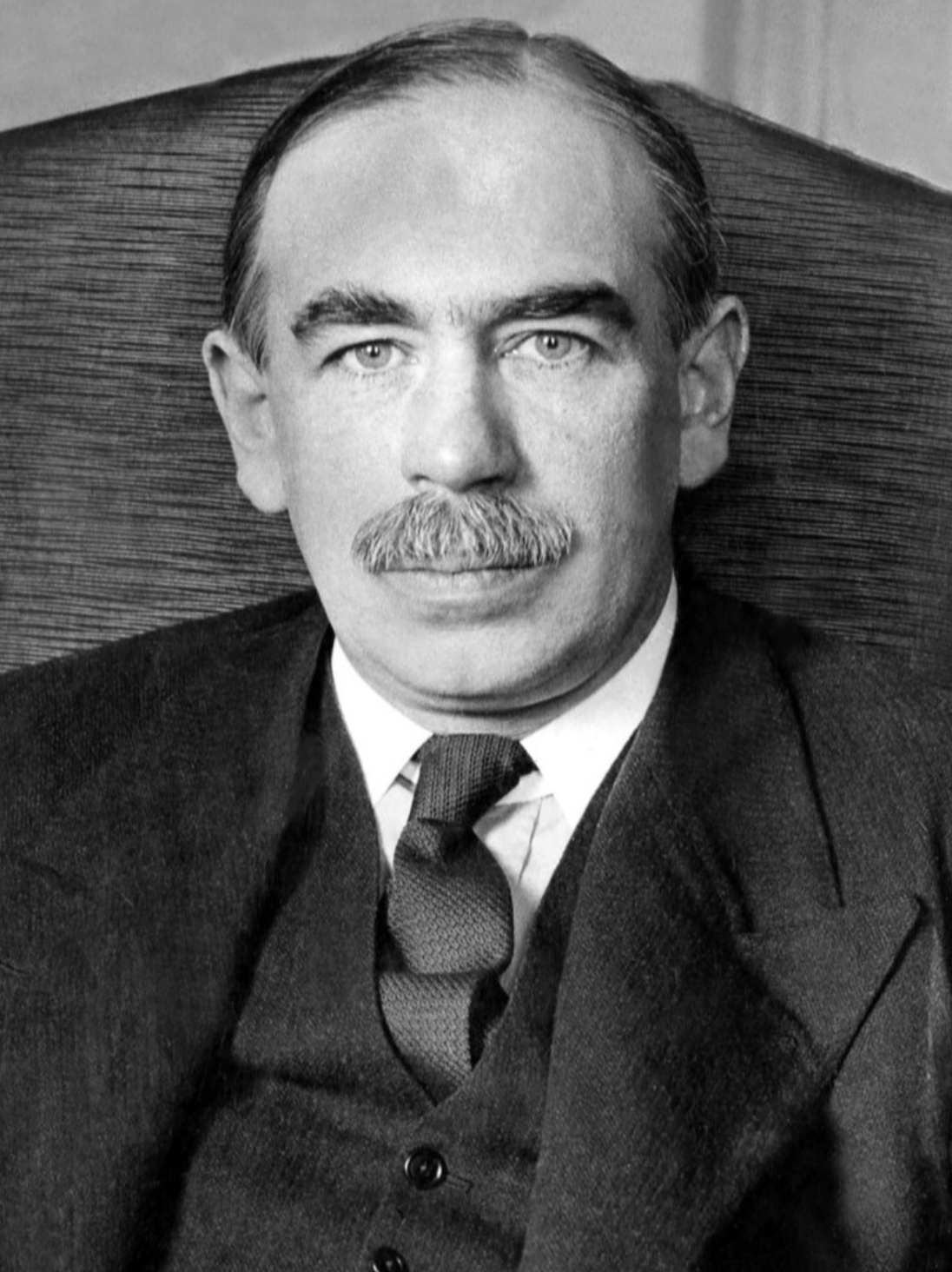
From Animal Spirits to Cultural Resonance
John Maynard Keynes transformed economics by recognising something many of his predecessors underplayed:
Markets are not always rational.
They are psychological.
Markets express forms of human rationality that are social and emotional, not purely mathematical.
John Maynard Keynes was a 20th century British economist who reshaped modern economics during the Great Depression.
His central insight was simple but transformative: economies are not self-correcting machines. When fear spreads and demand collapses, markets can stall for years. In those moments, governments must step in to restore confidence and stimulate spending.
For Coolnomics®, Keynes matters because he recognised that sentiment drives markets. Where classical economics focused on equilibrium, Keynes focused on emotion and expectation.
He brought psychology into macroeconomics.
Let’s explore it.
1. Animal Spirits vs Emotional Infrastructure
Keynes introduced the concept of “animal spirits” to describe the emotional drivers of investment and economic activity. Entrepreneurs do not invest purely on mathematical calculation. They act on confidence, optimism, instinct.
This aligns directly with the Coolnomics® premise that markets are emotional ecosystems.
Keynes:
Investment fluctuates with confidence
Fear causes contraction
Optimism fuels expansion
Coolnomics®:
Resonance drives momentum
Cultural signals shape confidence
Emotional energy determines economic velocity
Where Alfred Marshall analysed equilibrium, Keynes analysed instability.
Where Adam Smith explained exchange, Keynes explained mood.
Coolnomics® extends this insight into the cultural domain: confidence today is not formed in boardrooms alone. It is shaped by media cycles, social identity, digital networks and collective narratives.
Animal spirits now move at algorithmic speed.
2. Government as Stabiliser vs Cultural Designer
Keynes’ most famous intervention was policy-driven demand management. When private demand collapses, government must step in. Spend. Stimulate. Restore confidence.
He understood that recession is not just a financial malfunction. It is a psychological freeze.
Coolnomics® would agree with the diagnosis but broaden the prescription.
Yes, stimulus matters.
But so does cultural legitimacy.
If people do not trust institutions, fiscal policy loses potency. As Coolnomics® emphasises, credibility and authenticity are essential for lasting resonance.
Keynes stabilised demand through fiscal tools.
Coolnomics® asks leaders to stabilise trust through cultural alignment.
In the 21st century, economic recovery requires not only spending power but social credibility.
3. Uncertainty vs Cultural Flux
One of Keynes’ most profound contributions was his emphasis on fundamental uncertainty. The future cannot be fully predicted. Markets operate under imperfect knowledge.
Coolnomics® shares this worldview.
Cultural signals are fluid. Identities shift. Meaning evolves. As seen across the Coolnomics® Live zeitgeist reports and case studies, economic momentum follows cultural mood shifts, in real time.
Keynes replaced mechanical certainty with probabilistic psychology.
Coolnomics pursues this trajectory further by exploring how collective meaning and identity structure economic behaviour.
Both frameworks reject the idea that economies are predictable machines.
They are moving, human systems.
4. The Long Run and the Human
Keynes famously wrote: “In the long run we are all dead.” He challenged the complacency of waiting for markets to self-correct while people suffered.
Coolnomics® echoes this urgency.
Economic systems must deliver not just long-run efficiency but present-day meaning and dignity. As articulated in Coolnomics® 101, the goal is to create more of what matters to the world.
Keynes prioritised employment and stability.
Coolnomics® prioritises resonance and regenerative value.
Both reject passive economic fatalism.
5. Aesthetic Sensibility and Cultural Intelligence
Unlike many economists, Keynes was deeply embedded in the arts. A member of the Bloomsbury Group, a patron of culture, he understood that creativity and economic life are intertwined.
This is where the alignment becomes philosophical.
Coolnomics® positions culture not as a decorative byproduct of growth but as the engine of economic value. Emotional capital precedes financial capital.
Keynes may not have formalised cultural economics, but he lived it.
He knew economies are not spreadsheets. They are societies.
Where Coolnomics® Extends Keynes
Keynes gave us:
Animal spirits
Demand management
The centrality of uncertainty
Government as stabiliser
Coolnomics® adds:
Cultural resonance as economic multiplier
Authenticity as policy leverage
Emotional intelligence as strategic capital
Regenerative design as future-proofing
Keynes focused on macroeconomic stability.
Coolnomics® focuses on cultural-economic vitality.
Strategic Reflection
If Smith built the architecture of markets and Marshall refined their mechanics, Keynes exposed their psychology.
Coolnomics® can be seen as the next step:
Not just psychology.
But culture.
Keynes showed that confidence drives investment.
Coolnomics® shows that culture drives confidence.
In an era of digital acceleration, climate anxiety and identity-driven markets, Keynes’ insights are more relevant than ever. And they were built for expansion.
Stimulus without resonance is temporary.
Growth without meaning is fragile.
Policy without credibility is weak.
Keynes taught us that markets are human.
Coolnomics® teaches us that humans are cultural.
And culture, ultimately, is what moves money.
About the Author
Robyn Wilson is a business strategist and economic theorist with two decades of experience leading commercial, cultural and public sector innovation. She is the founder of Coolnomics® Intelligence Lab & Business School where she teaches ambitious leaders how to build businesses that resonate.
Robyn holds an MBA from UTS Business School and has advised CEOs, policymakers, artists and investors on having big, cool ideas that are good for the world - and make money. Her work is used in boardrooms, lecture halls and leadership retreats across sectors.
She is a featured speaker on cultural resonance, business building and creative direction.
Speaking, strategy or collaboration enquiries: robyn@coolnomics.com
