Cool is Truth: Anne Hathaway, Yung Lean & The Bees
In 1714 a doctor named Bernard Mandeville published The Fable of the Bees, a poem about a hive of bees. It would be indicted as a public nuisance, denounced from every pulpit, and banned. The bees were vain, ambitious and indulgent. They cheated on their taxes and dressed beyond their means. The hive was rich.
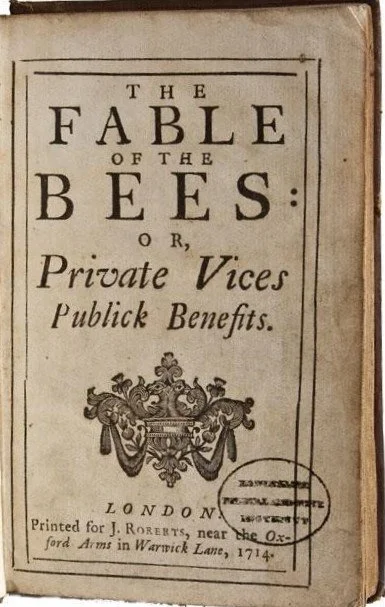
Fable of the Bees, Bernard Mandeville, 1714
Then the bees became good. Vanity left them. Ambition softened. Indulgence ended. Within a generation the hive had collapsed. The shops closed. The trades emptied. The honey ran out.
Mandeville's argument, stripped of its 18th century scandal, was simple. Economies do not run on virtue. They run on desire. Pretending otherwise does not produce a moral hive. It produces an empty one.
Half a century later, Adam Smith built half of The Wealth of Nations on his shoulders, and never quite acknowledged the debt.
Three hundred years later the argument is more alive, not less. We are sitting inside a contemporary version of it. The engine is still desire. What has changed is the audience. They can now detect, at a glance, what is honest and what is theatre. Swedish rapper Yung Lean, actress Anne Hathaway and beauty icon Isamaya Ffrench know about it.
Cool is the ultimate metric of honesty. Resonance is the test. Everything else is theatre.
The Shift Was Real
The cultural movements of the last decade, BLM and MeToo most prominently, were structural corrections. Old systems came under late and necessary pressure. Brands, like institutions, had to decide whether to adjust or be reshaped. Many adjusted. Some were reshaped. The ground genuinely moved.
This part of the story is rarely contested honestly. The shift was overdue. The world is better for it. Anyone working seriously in brand or institutional strategy now thinks about meaning, equity and care in ways they did not before. That is progress.
The trouble is what came next.
The Performative Trap
The integration of new values into brands and institutions was difficult work. The shortcut was performance. It was easier to declare than to integrate. Easier to publish a statement than to redesign a system. Easier to rewrite a brand line than to rewrite a hiring policy.
So a great deal of what looked like cultural change was theatre. Brand briefs filled with virtue language and emptied of risk. Campaigns that postured at meaning while leaving every operating practice intact. Stock photography for the values page. A black square. A pronoun line in an email signature attached to nothing.
Some brands did the work properly. Many did not. Both groups looked similar from the outside for a while. They do not look similar anymore.
The Backlash, Named More Precisely
What is now called the backlash is mostly misunderstood by the people most exhausted by it. What it actually detects is theatre. The values are largely incidental.
Audiences can tell the difference between a brand that means it and a brand performing it. The signal travels. They feel the gap between the values page and the lived experience. They sense whether a campaign was made to be admired or made because the maker had to make it.
When the gap is wide enough, they push back. Sometimes articulately. More often anti-articulately. Wokeism. The world has gone mad. Everyone is too sensitive now. Blunt instruments swung at theatre by people who cannot quite name what is wrong, only that something is.
The instinct contains a real perception, even if a partial one. Some of it is also avoidance of the inner work the original movements asked for. Both true. Most leaders, and most audiences, sit somewhere between.
The Paralysis
Most senior leaders right now are stuck in one of two postures.
The first is perform harder. Add another values line. Run another training. Ship another campaign about meaning. This rarely works. Audiences see through it faster every time. The sophistication of detection has overtaken the sophistication of theatre.
The second is retreat. Stop talking about anything that could be misread. Pull the values language out of the brief. Let the marketing get small and quiet and inoffensive. This works for about a quarter, and then audiences notice the silence and read it as something worse than failure. They read it as cowardice.
Neither posture is the way out. Both are theatre. One performs virtue, the other performs neutrality. Both are read for what they are.
The Hegelian Tension of Change
Here is where the frame changes.
19th century philosopher Georg Hegel observed that society moves forward when the gap between what it says it is and what it actually is becomes intolerable. The contradiction itself is the engine. The dissonance produces motion. The motion produces synthesis. The synthesis is then tested by a new set of contradictions and the cycle continues. History is the dialectic working itself out.
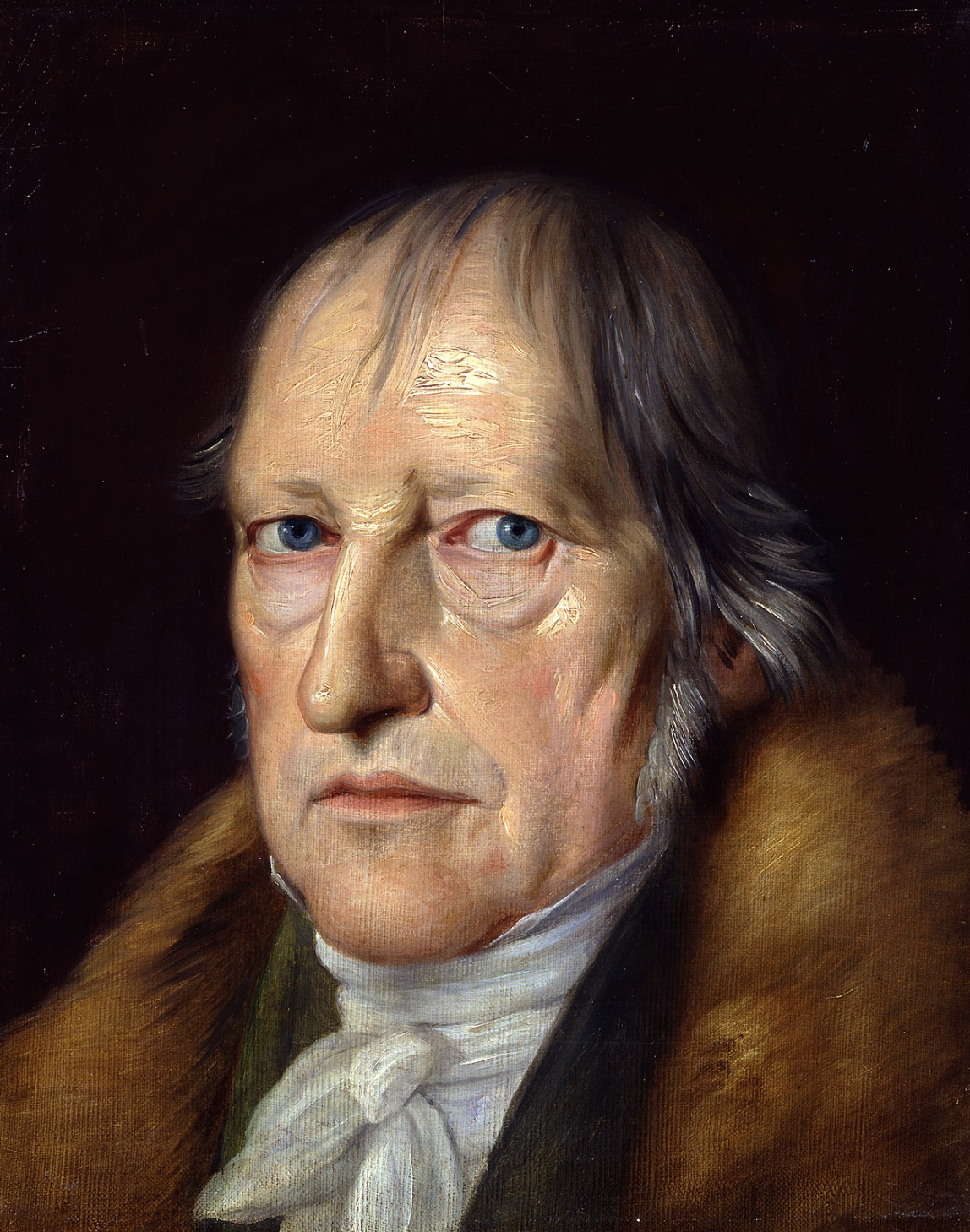
German philosopher Georg Wilhelm Friedrich Hegel
We are inside a Hegelian moment now. The gap between what brands and institutions said they were and what they actually are has become intolerable to a generation of audiences. That intolerance is the engine moving. We are in dialogue. We are in synthesis. We are seeing more than any society has seen before. Race, class, gender, geography, power, history. Audiences now read brand work the way critics read a novel.
This is the part most strategy missed. The audience got literate. Zeitgeist fluency, at scale.
Zeitgeist fluency is the capacity to read the time you are in. To see what is moving, what is finished, what is rising, what is hollow, what is honest. To read casting and know who was in the room when the decision was made. To read product and know whose body was assumed. To read a campaign and know whether the maker had skin in the game. To read a brand statement and know within seconds whether it is worth anything.
The audience now has it. The leadership class is racing to catch up.
What Should Brands Do?
The work for brands in this era has nothing to do with declaring values, performing integration, or even being authentic. Authenticity has become its own kind of theatre.
The work is to develop zeitgeist fluency inside the operating layer of the business and let the fluency show, without naming it, through every choice that gets made.
Casting. Brief. Product. Setting. Language. Who you put on screen and who you assume is watching. Whose discomfort the work is willing to sit with. Whose joy it is willing to show. Whose body the product was built for. Whose life the strategy accommodates. Whose vocabulary the brand uses without flagging that it is using it. Every one of these is a fluency test. Audiences will pass or fail you on the sum.
Crucially, none of this is said. Saying it would collapse it. The audience would read the saying as theatre. What lands is what is unmistakably felt without being declared. The audience reads the sum of the choices and feels the fluency. The felt fluency is the deepest form of cultural recognition we have. It is also the most resistant to imitation, because it cannot be faked at the level of message. It can only be produced by people who actually read the time they are in.
The Pattern in the Wild
This is happening, in flashes, all around us. The work that resonates right now is the work made by people who are clearly literate in the present moment.
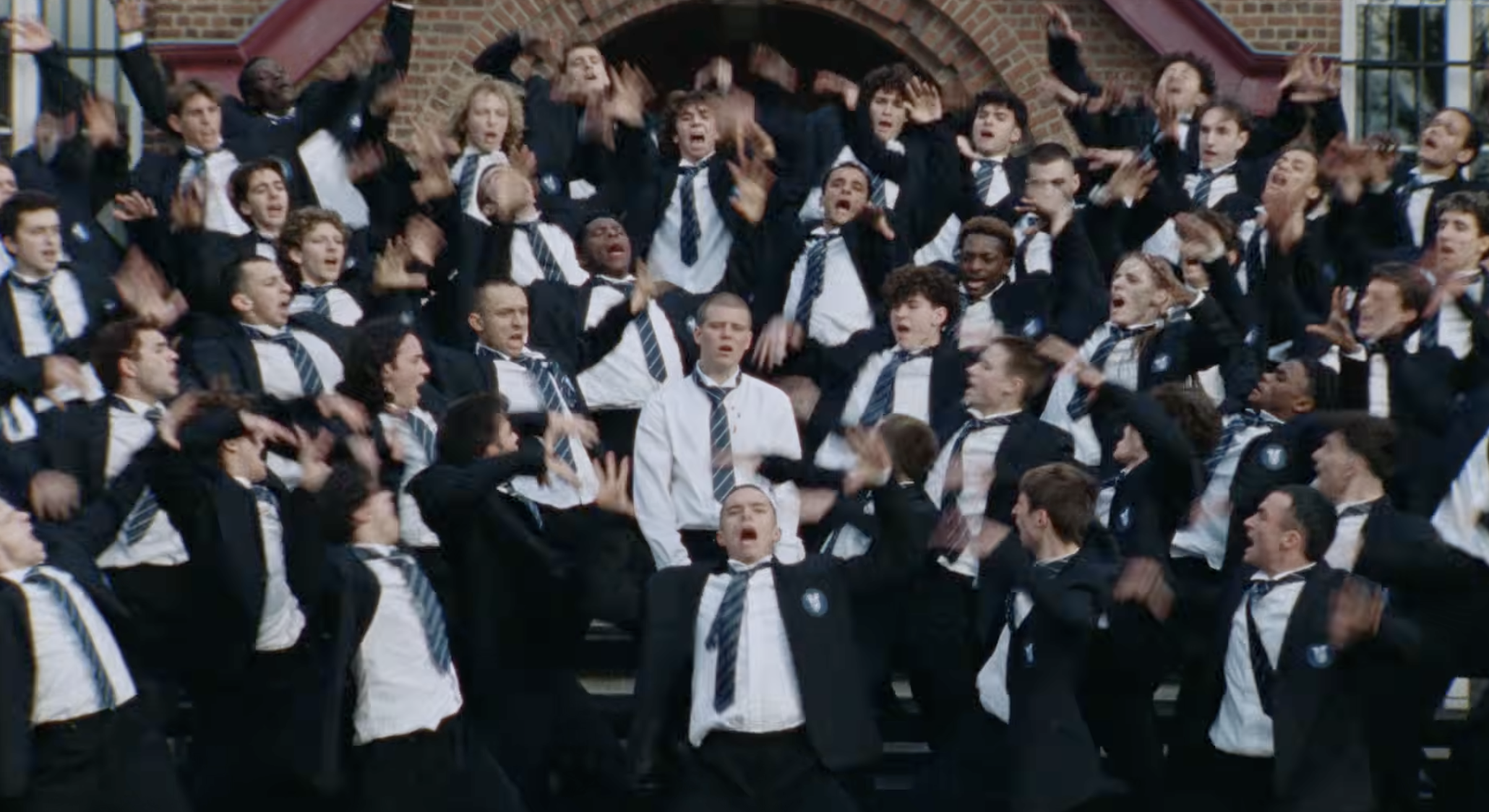
GENER8ION's STORM, starring Yung Lean and directed by Romain Gavras, is a brutal, choreographed, elegiac piece of work that lives entirely in image, body and sound. It does not announce its position on masculinity, institution or tradition. It speaks to all three so precisely, through casting and choreography and setting, that the position is felt rather than read. Among the most resonant cultural objects of the year, precisely because it refused to explain itself.
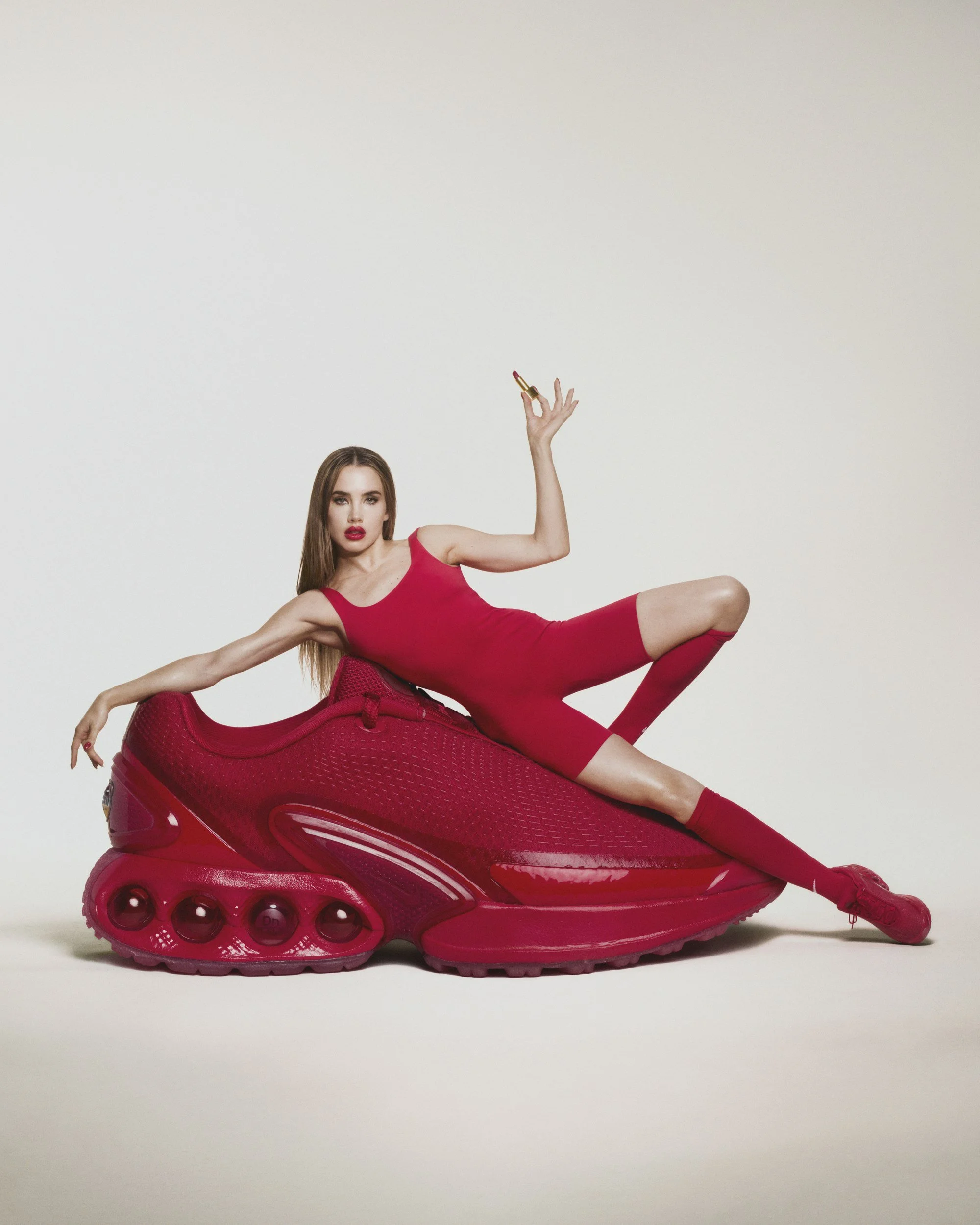
Isamaya Ffrench's Run Forever with Nike works for the same reason. Female athleticism is depicted as visceral, strange, beautiful, alive. Empowerment is never claimed. The work assumes the importance of women in sport, then makes something that anyone with eyes wants to be near.
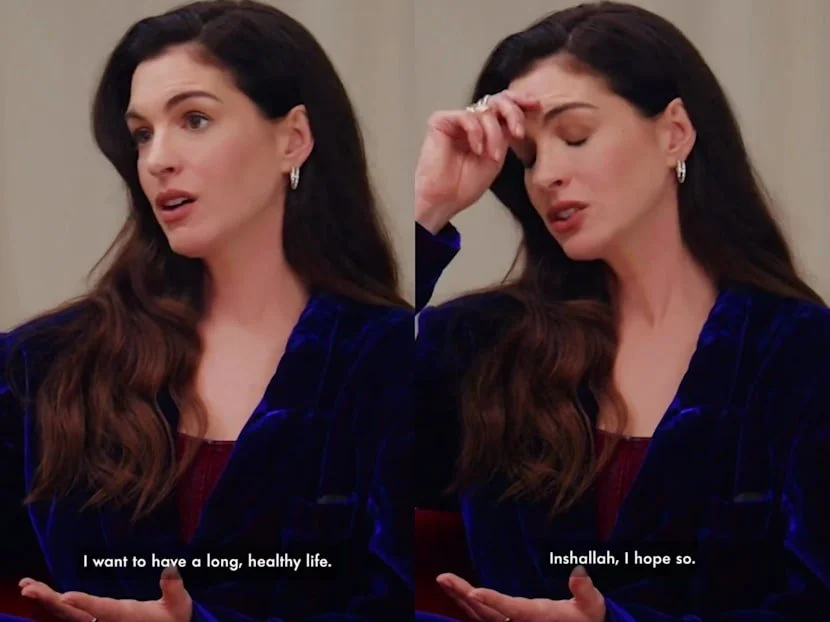
Anne Hathaway said Insha'Allah in a recent interview promoting The Devil Wears Prada 2. She did not flag it. She did not explain it. She used it as a piece of casual lexicon, the way someone who has spent real time inside a culture would. The internet predictably split. Some celebrated it as fluency. Some accused her of performance. Some demanded explanation. The thing that gave the moment its weight was that she did not provide one. The fluency was assumed, not declared.

Chinamaxxing is the more interesting case because it is contested. Some see a generational opening toward Chinese culture, fuelled by aesthetic appetite and distrust of the American narrative. Others read it as a new flavour of orientalism, a culture made consumable then disposable. Both readings are partly right. The contest itself is the marker. We have become a culture that argues, in real time, about whether a piece of fluency is the real thing or a copy of it. That argument is the new test. Any leader at this level should expect it and be ready to pass it.
The pattern across all four is the same. The work demonstrates fluency rather than declaring values. It speaks to the time it is in without explaining itself. And it is beautiful enough to be wanted. That is the part most strategy decks miss.
A Note on Register
It would be easy to read these four examples and conclude that the work of resonance is to be visceral, edgy, knowing. That misses the point. Fluency is the capacity to match the register of the work to the register of the moment. Sometimes that calls for the visceral. Sometimes for the wholesome. Sometimes the elegant, the utilitarian, the absurd, the quiet.
The fluency is in the matching.
Liquid Death is fluent because it is irreverent in a category that had become sanctimonious. A wholesome campaign for a wholesome moment is equally fluent. The error sits in the reading, not the choice. The question is which register the moment is asking for.
Resonance is the register meeting the moment.
Cool is Truth
If this is the test, here is the work for leaders. This encompasses executives, brand and product teams and the C-suite.
Stop trying to perform the right values. Try to read the time you are in. Stop trying to look principled. Try to make work that is fluent. Stop asking whether a campaign is defensible. Ask whether it is true.
This is what Coolnomics has been pointing at the whole time. Cool is a recognition system. Cool is what culture calls things that are fluent in the present moment, that operate from inside zeitgeist literacy without needing to announce it. Cool is truth made visible.
This is also why the inauthentic versions get rebuked so quickly now. The detection system is fast and ruthless. A brand that is fluent, even imperfectly, registers as cool. A brand that is performing fluency, even competently, registers as cringe. The audience does not always know why. They just know.
Questions for the C-Suite
Zeitgeist fluency is a capacity, not a deliverable. It cannot be installed by an agency. It cannot be subcontracted to a junior team. It has to be developed inside the people making the decisions, because it is their fluency the audience reads.
A starting point. Six questions worth sitting with at the leadership level.
What is the time we are in actually asking of us, beneath the surface noise?
Who is in the room when our most important decisions are made - and who is missing?
Whose body, life, vocabulary and discomfort have we assumed in our product, our brief, our brand?
Where in our work are we declaring values we have not actually integrated into the operating layer?
Where are we performing neutrality because we are afraid to be misread?
What would our brand look like if it were honest all the way down?
These are the questions that move a leadership team from values posture to zeitgeist fluency. They are uncomfortable. They are also the most generative questions a senior team can be asked. Some of the most interesting work we do at Coolnomics happens in exactly this terrain. Sitting with executive teams as they bring the zeitgeist into the boardroom and reckon with what it means for the next decade of their brand.
Mandeville was right that you cannot moralise an economy into health. Hegel was right that the dissonance is the engine. The brands that take both seriously will lead the next decade. Meaning is preserved precisely by no longer being declared. It shows through every choice they make, and the audience, finally, feels seen.
Cool is the ultimate metric of honesty. Cool is resonance. Resonance is truth. The hive that lasts is the one whose bees know who they are, and know the time they are in.
A note for the reader: The Coolnomics® is a living body of work, developing in public. Disagreement, contribution and counter-thinking are welcomed at every stage.
A note on sources.
The Mandeville reference is to The Fable of the Bees, 1714
Hegel's dialectic of contradiction and synthesis runs through the Phenomenology of Spirit, 1807
STORM is GENER8ION x Yung Lean, directed by Romain Gavras and choreographed by Damien Jalet
Isamaya Ffrench's Run Forever is a recent Nike collaboration
Anne Hathaway's use of Insha'Allah occurred in a People magazine interview promoting The Devil Wears Prada 2, late April 2026
Chinamaxxing is the social media trend that emerged through 2025 and 2026 around Western adoption of Chinese cultural signifiers, contested in both Western and Chinese discourse
Coolnomics® is a methodology and economic philosophy founded by Robyn Wilson in 2023. Strategy work, lectures and education are available.
